

 เลือกภาษาไทย
 | | |
|
Thai เลือกภาษาไทย |

 LYNX | |||
| The LYNX first flew in march 1971 and was developed by English and French Helicopter Agreement namely
Aerospatiale and Westland . There are so many versions and so many designated because each country has their own designation but we can
categorized into two main versions of the lynx. Two main versions are: A wheeled versions primary for Naval use and Skids versions primary for Army use . As the Army Lynx , it is generally given the designated AH and perform general purpose and utility . Lynx AH.Mk7 is uprated British Army version with improved systems, reversed direction tail rotor and improved composites blades to reduce noise, redesigned tailcone . As the Navy Lynx , it is generally given the designated HAS and performs a multi-purpose role that includes all-weather anti-shipping and anti-submarine offensive attack. The Naval version was intended to serve as anti-submarine helicopter. The HAS 2 entered service in 1977, the first HAS 3 with uprated engines and a search radar and delivered in July 1982 . The latest version of Naval Lynx, the HMA 8 , is currently entering service and has further uprated engines and more capable search radar. The main physical differences of Naval Lynx compareed to the Army Lynx is a broader nose, torpedo armament and wheels instead of lasnding skids. Super Lynx is the only helicopter in its weight class designed specifically for operations from small ships in all weathers . Mostly Super Lynx is the upgraded for export Naval Lynx version helicopter. Speed difference between the Army and Navy version : The Navy version can fly as fast as the Army version, except it is not allowed to do so because the tail of Navy verion is foldable and structural not as strong as the Army version. Battlefield Lynx is the upgraded export army Lynx which is British Army's front line transport helicopter.This Battlefield Lynx feature wheeled landing gear and provision for anti-helicopter missiles each side of fuselage. It has advanced technology composites main rotor blades. The four composites main rotor blades are mounted on top of the cabin. It has two turboshaft engines mounted on top of the rear of the cabin. The fuselage feature an oval,stepped up. The Lynx airframe is constructed of composite and light alloy. Landing skids are used on army versions, naval versions have wheels. High- mounted , tappered tail boom include a swept-back fin along with a single flat on right side near top of tail fin and tail rotor on left side. For Naval, the wheels are angle outward at 27 degrees to help prevent rolling around and features Oleo-Pneumatic struts which absorb the shock . There are no brakes on the Lynx. The cabin space of approximately 5.2 cubic meters can accommodate up to 9 troops. Up to 1360 kgs.of cargo can be under slung from an external cargo hook for ship-to-ship or ship-to-shore. Flying controls : pilot control being limited to selection of desired rotor speed range, in event of one engine failure, system restores power up to single-engine maximum contingency rating; main rotor system can provide negative thrust to increase stability on deck after touchdown on Naval version. Armament: For armed escort, anti-tank or air-to-surface strike missions, army version equipped with two 20 mm cannon mounted externally and 7.62 mm machine gun mounted inside cabin. External pylon can be fitted on each side of cabin to stores ; two minigun or other gun pods; two rocket pods; or up to eight HOT, Hellfire, TOW, or similar air-to-surface missiles. For ASW (Anti Submarine Warfare) armament includes two Mk 44, 46, A244S or Sting Ray homing torpedoes, one each on an external pylon and 6 marine markers; or two Mk 11 depth charges.Alternatively, up to four Sea Skua semi-active homing missiles. | |||
| SPECIFICATIONS OF WESTLAND LYNX | |||
| Early Version Lynx | Battlefield Lynx & Super Lynx |
||
| Engine | Rolls-Royce Gem 2 | Rolls-Royce Gem 42-1 or LHTEC CTS800-4Ns |
|
| Power | 900 shp (671 kW) | 1,120 shp (835 kW) for Rolls-Royce 1,840 shp (1,372 kW) for LHTEC |
|
| Number of Engine | 2 | 2 | |
| Main Rotor (four blades) | 42 ft (12.80 m) diameter | 42 ft (12.80 m) diameter | |
| Tail Rotor | 7 ft 3 in.(2.21 m) diameter | 7 ft 9 in.(2.36 m) diameter | |
| Length Overall ( include rotors ) | 49 ft 9 in.(15.165 m) | 50 ft 0 in.(15.24 m) | |
| Max.Takeoff | 10,000 lb (4,535 kg) | 11,300 lb (5,125 kg) | |
| Number of pilot | 2 ( pilot & co-pilot or observer ) | 2 ( pilot & co-pilot or observer ) | |
| Height | Army 11 ft 6 in. (3.505 m) Navy 11 ft 5 in.(3.48 m) |
Battlefield 12 ft 3 in.(3.73 m) Super Lynx 12 ft (3.67m) |
|
| Speed | 137 knots | 150 knots | |
| Range | 530 nm. | ||
| Armament for Army and Navy | 2-20 mm. cannon, 7.62 mm. machine gun external: 2 gun pods, 2 rocket pods. 8-HOT , Hellfire , TOW. |
4 anti-ship missiles (Sea Skua) 2 torpedoes on each ex.pylon |
|
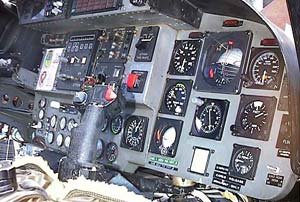 |
cockpit " Westland Lynx " | ||
| 1 nm.(nautical mile) = 1.15155 miles, 1 kt (knot) = 1.15155 mile / hr. 1 mach = 761 mph.(SL,ISA) |
|||
 © 2001 Thai Technics.Com All Rights Reserved | |||
| Contact Webmaster | |||